
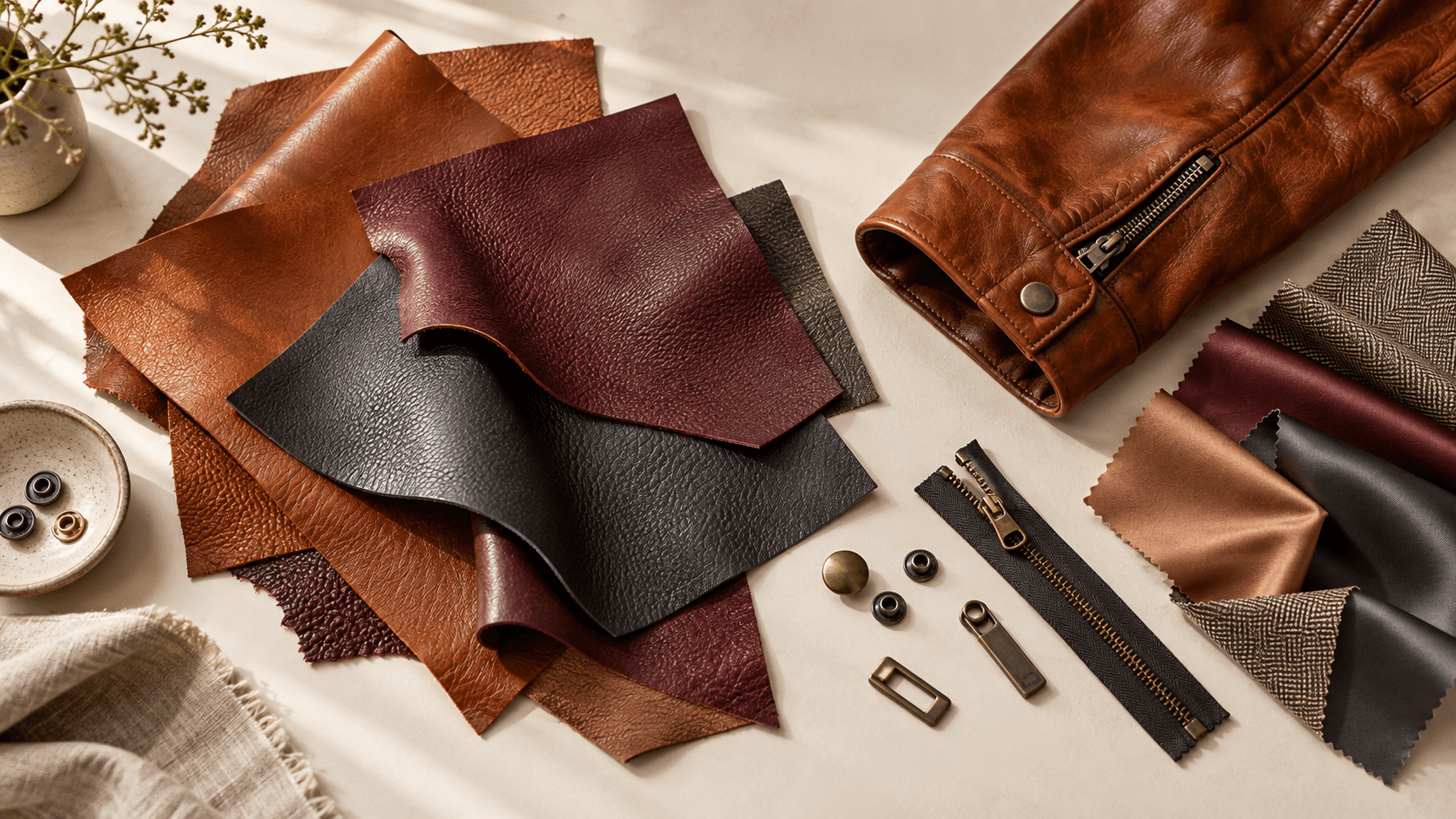
Fashion Leather Garments
To choose leather for a fashion jacket collection, start with the shape and feel you want the finished garment to have. Then compare physical material samples against that design. A leather name or a photograph leaves important questions about softness, finish and construction unanswered.
For a brand developing a new collection, these decisions belong near the beginning of sampling. This guide explains what to compare, which jacket details deserve attention and what to record before approving a production reference.
What should your fashion leather jacket feel like?
Describe the customer and the intended silhouette. A relaxed overshirt, a cropped jacket and a structured biker style create different questions about drape, support and layering. Explain whether the garment should feel soft and fluid or hold a more defined shape.
Use front and back sketches alongside a measurement chart. Identify the clothing expected underneath and the fit you want through the shoulders, sleeves and body. A description such as soft leather with a clean, supported collar gives the sample team a clearer direction than a general request for premium quality.
Compare leather swatches alongside the design
Cowhide, sheep leather and goat leather are broad material descriptions. Processing, thickness and finish can produce different results within each group. Ask for identified swatches and compare the actual options proposed for your jacket instead of choosing from the material name alone.
Review the surface, reverse side, flexibility and response to folding. Place the swatches beside your design references and discuss which option supports the intended appearance. Keep the chosen reference labelled so later samples and proposed substitutions can be compared with the same material.
Check leather weight at collars, cuffs and seams
Assess material weight and softness through the jacket's construction details. Folded cuffs, collar edges, pocket openings and seam intersections can contain several layers. Review how those areas will be assembled before the first sample is treated as an approved design.
If a collar loses its intended shape or a cuff feels bulky, identify the affected detail in your comments. Discuss the pattern, support and construction together with the material. Record any change to the selected leather reference so the next sample can be reviewed on a consistent basis.
Approve colour and finish with a physical reference
Describe the intended colour, surface texture and level of gloss. Reference photographs help communicate the direction, while an approved physical sample gives the team something concrete to compare during development. Review the material under consistent lighting and across an area large enough to judge its appearance.
Agree what variation is acceptable within one jacket and across a delivery. Terms such as matte, distressed and vintage can mean different things to different people. Keep the approved swatch and any finish comments together so the final decision is traceable.
Review the jacket with its lining and trims
Review the outer leather, lining, zips, snaps and reinforcement as an assembled garment. Check the front balance, collar shape, sleeve movement, pocket access and fastening alignment. A material decision can look successful in a swatch and still need adjustment when combined with the rest of the jacket.
Include labels, artwork and care information in the sample review. Record trim references and placement dimensions, especially where branding sits near a pocket, seam or fastening. Confirm care wording for the actual material combination with the people responsible for product information.
Leather jacket sample approval checklist
Use one comment sheet to connect the design, material reference and finished sample. Record the sample size and revision before reviewing these points:
- Leather reference, colour and finish match the approved direction.
- Shoulder, sleeve and body measurements follow the agreed chart.
- Collar, cuff and pocket construction have been reviewed for shape and bulk.
- Lining, fastenings and labels are checked in the assembled jacket.
- Required corrections have marked locations and clear expected results.
- The approved revision and any open decisions are recorded together.
